Handwritten Ramblings
I had the idea of writing about writing, more specifically handwritten content, and figured what better means of making a post about it than one consisting of handwritten scans. Be forewarned, being handwritten, there’s quite a bit less polish on my already rambling and disorganized content.
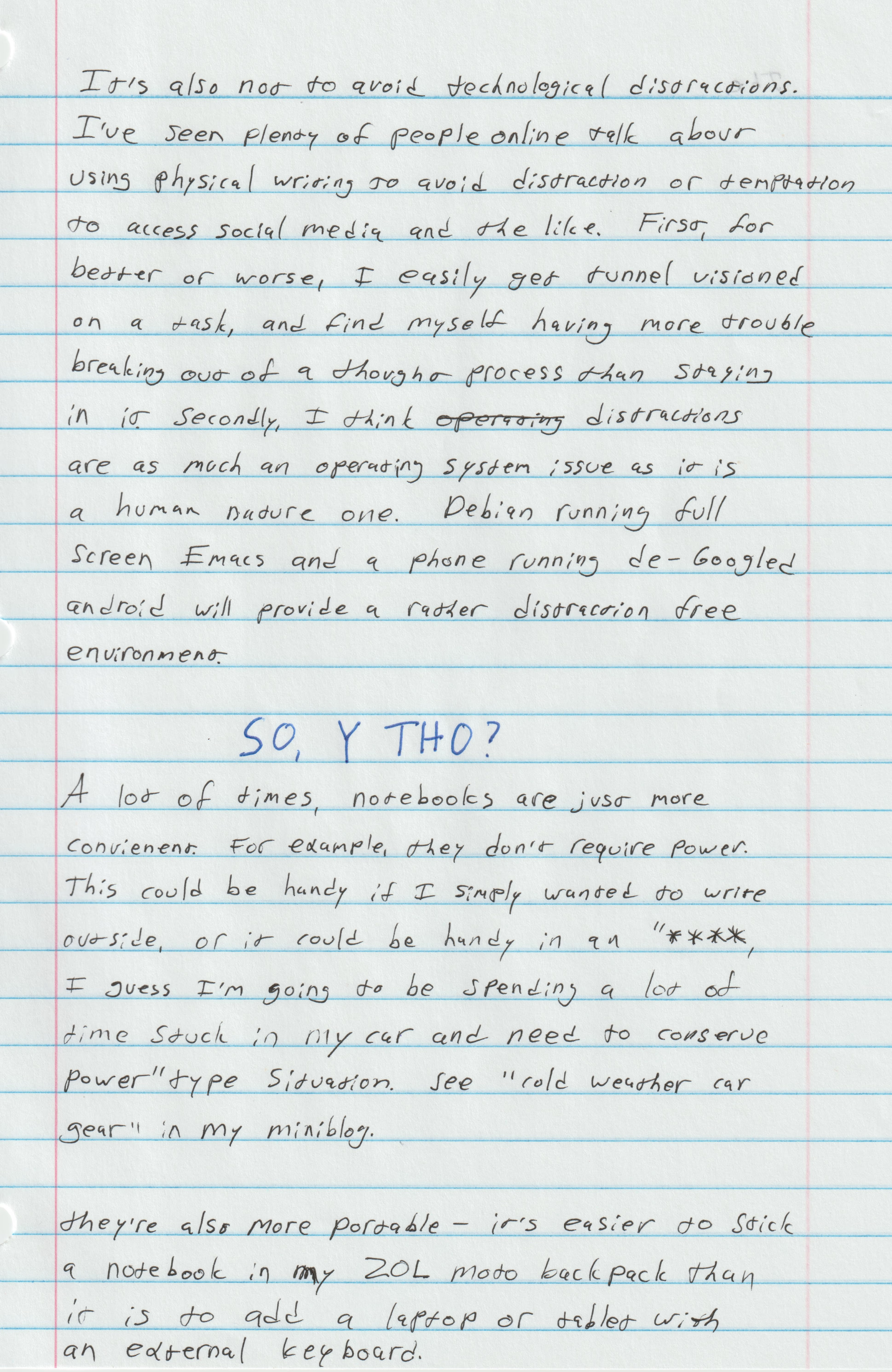
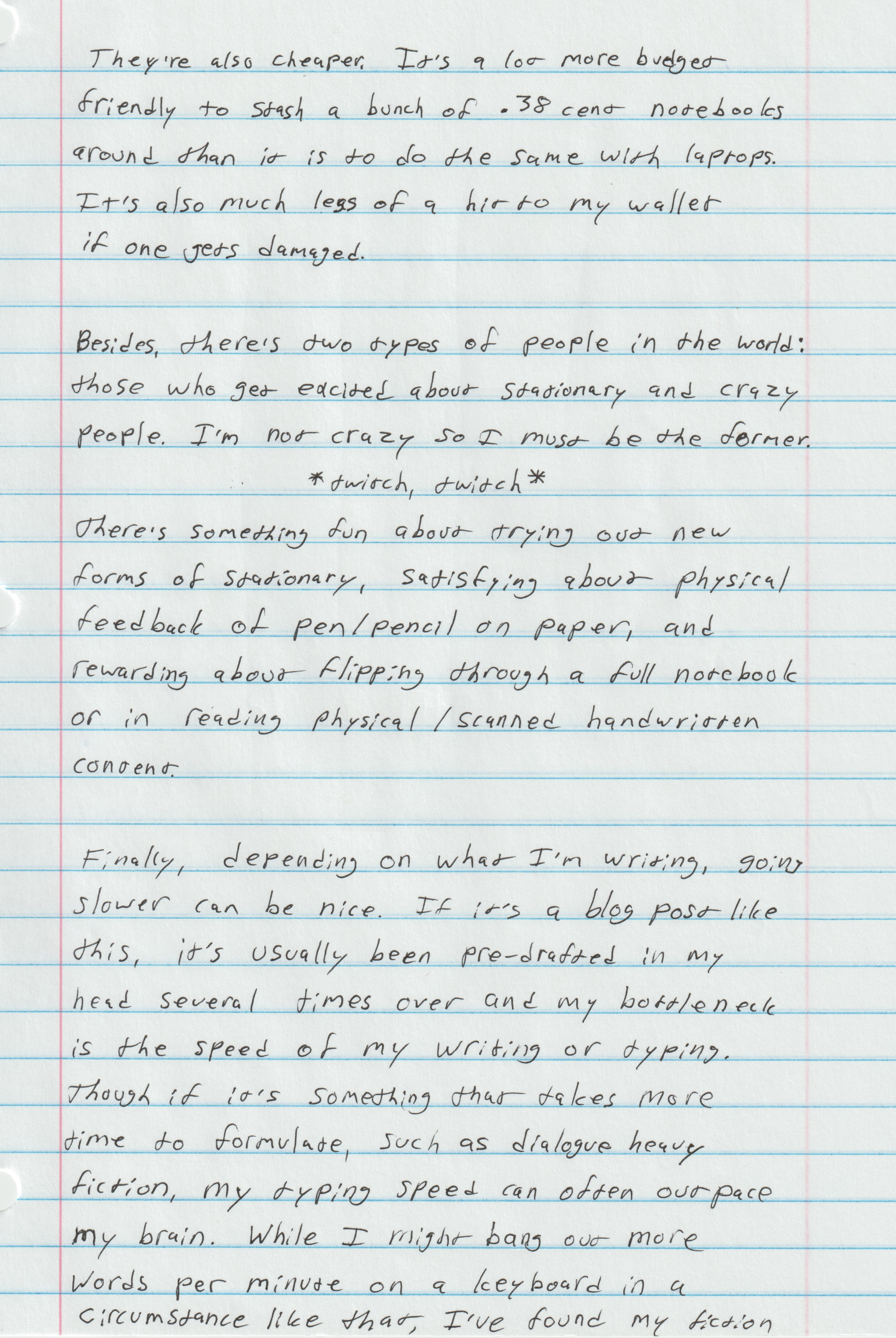
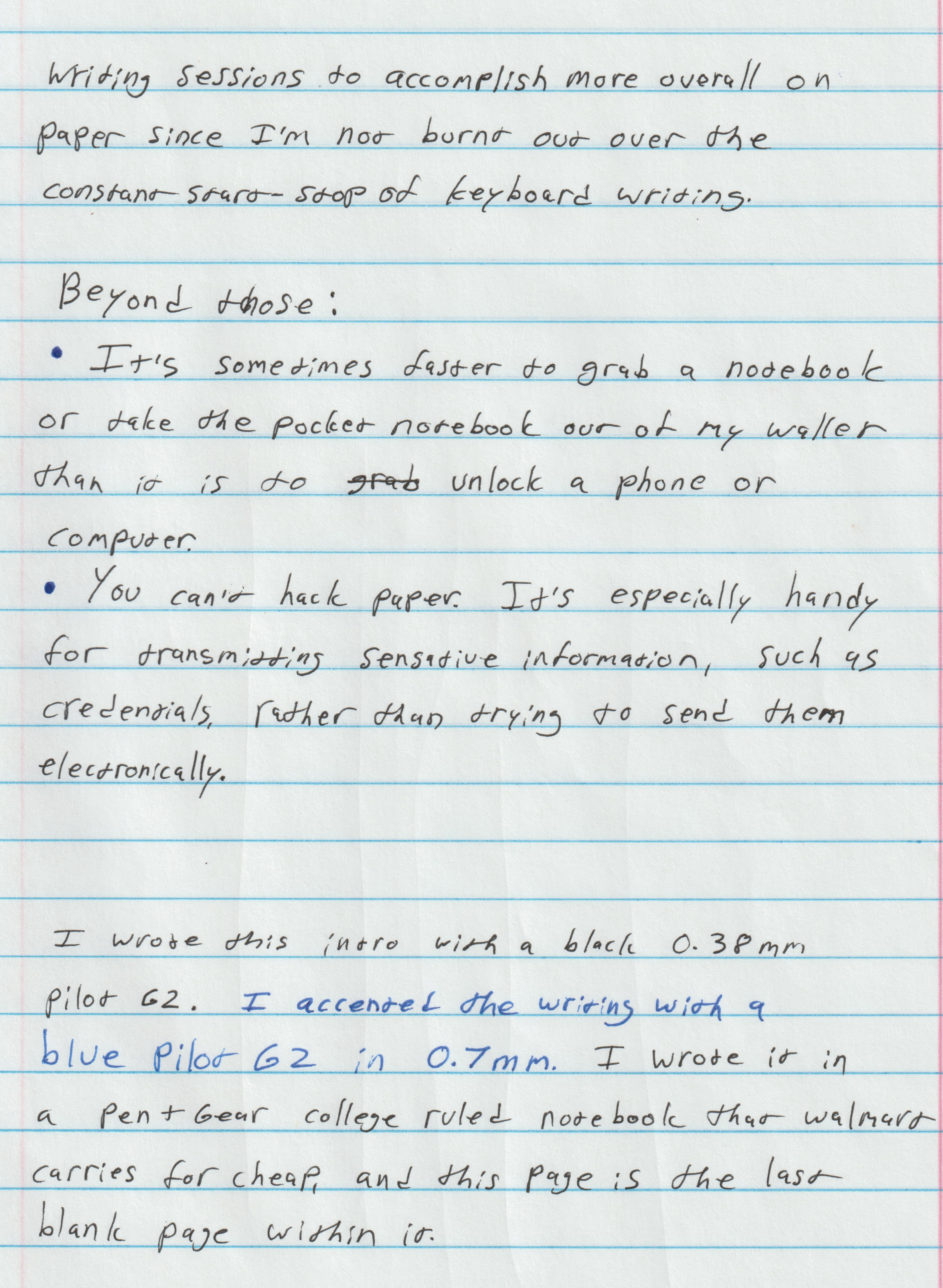
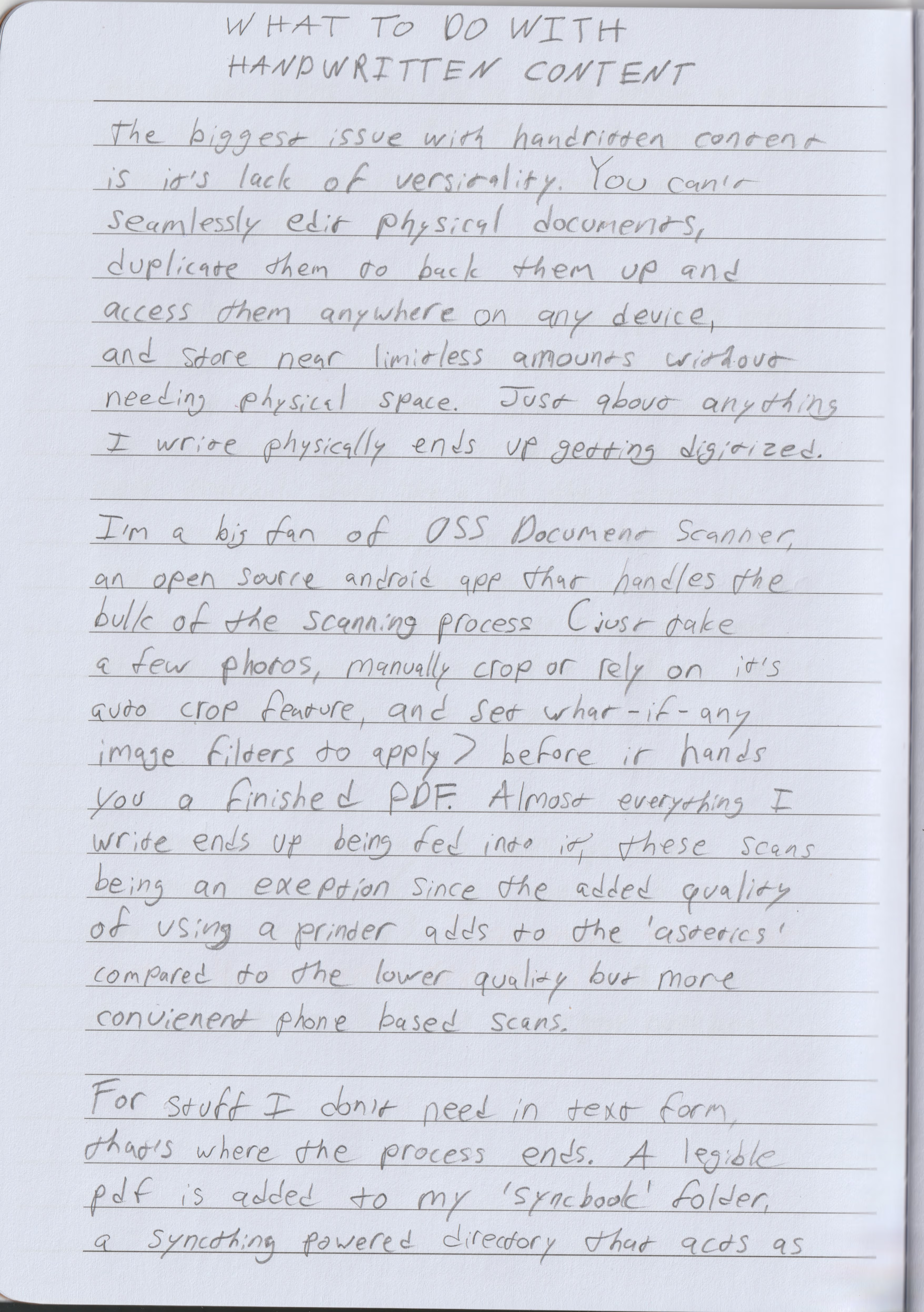
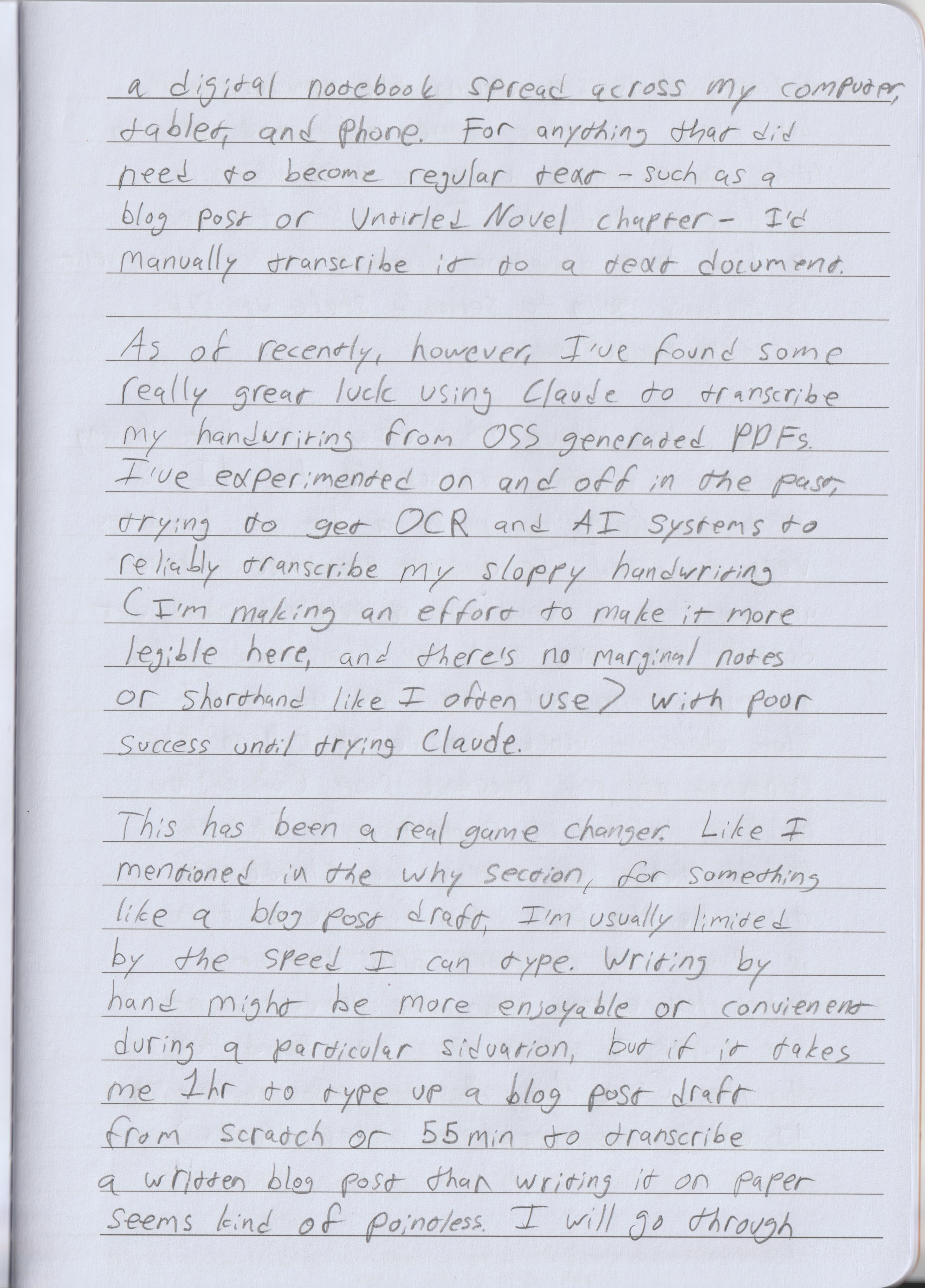
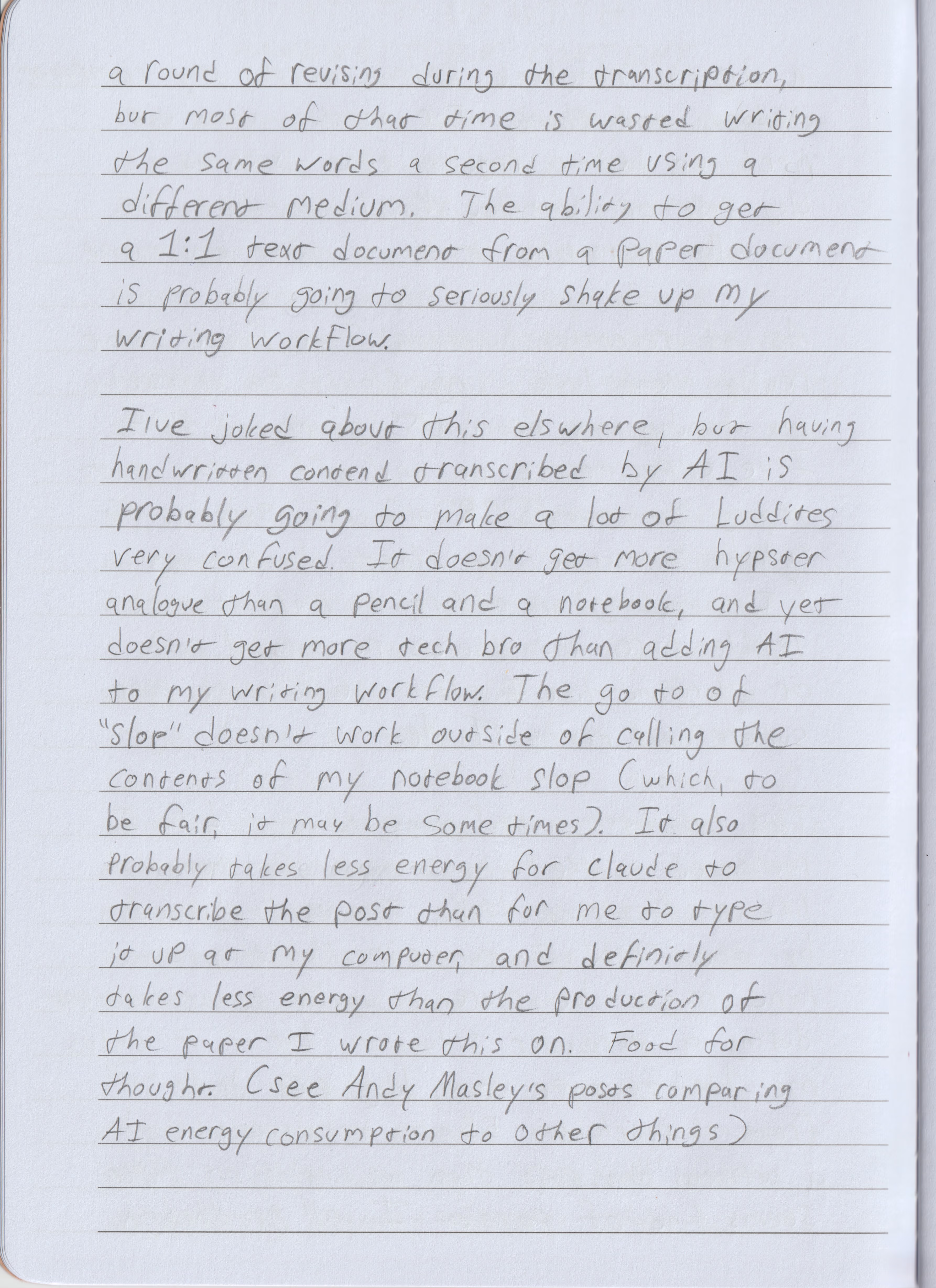
If you can’t read my handwriting - be it because of a screen reader/accessibility need, the amount of data the page takes up, or just because it’s rather illegible - there is a Claude powered transcription of my handwriting on the bottom of the page. Although don’t expect anything much more polished - it’s explicitly 1:1 - spelling mistakes, mid sentence page breaks, and lack of revisions included.
But, without further ado:
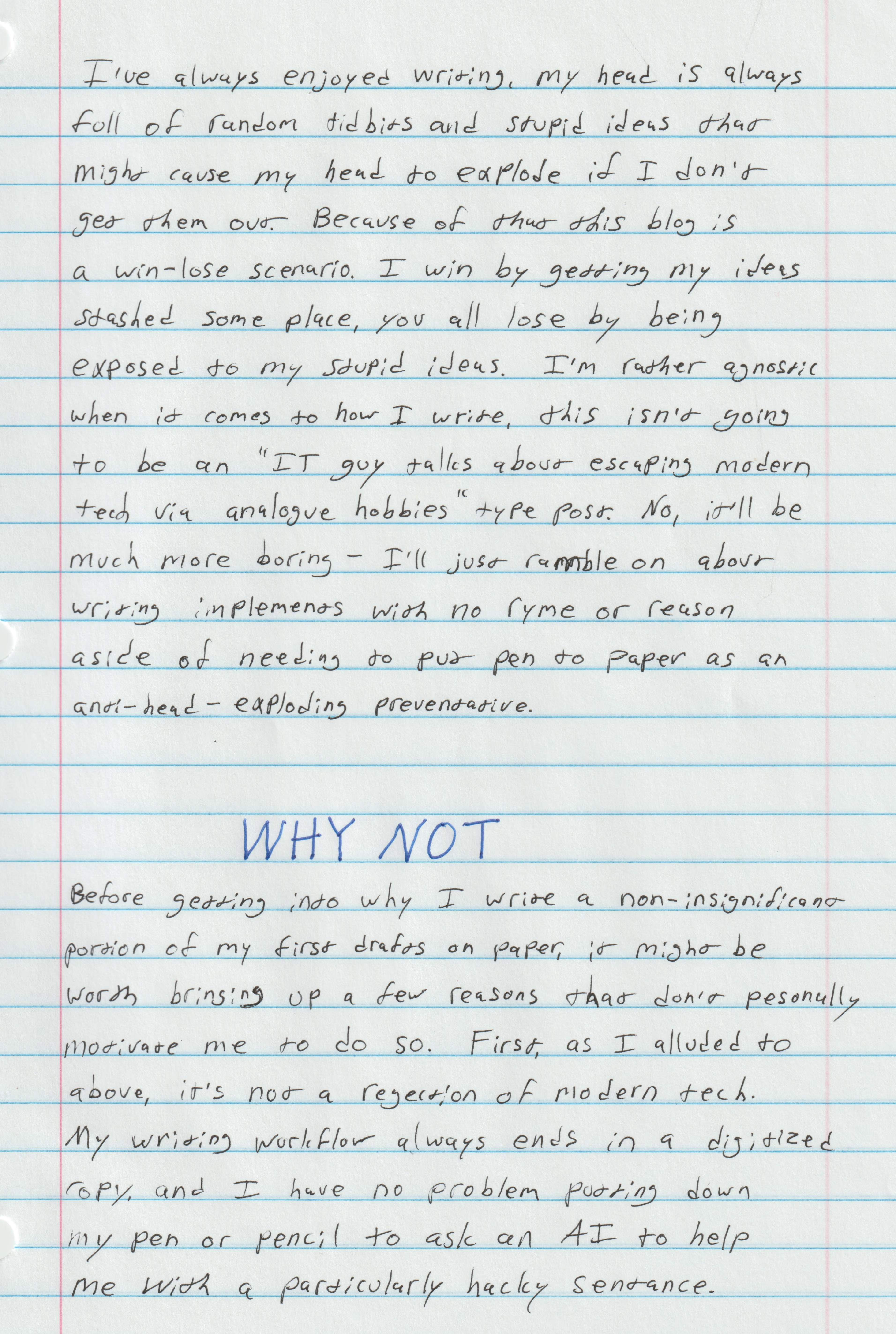
I’ve always enjoyed writing, my head is always full of random tidbits and stupid ideas that might cause my head to explode if I don’t get them out. Because of that this blog is a win-lose scenario. I win by getting my ideas stashed some place, you all lose by being exposed to my stupid ideas. I’m rather agnostic when it comes to how I write, this isn’t going to be an “IT guy talks about escaping modern tech via analogue hobbies” type post. No, it’ll be much more boring - I’ll just ramble on about writing implements with no ryme or reason aside of needing to put pen to paper as an anti-head-exploding preventative.
WHY NOT
Before getting into why I write a non-insignificant portion of my first drafts on paper, it might be worth bringing up a few reasons that don’t pesonally motivate me to do so. First, as I alluded to above, it’s not a regection of modern tech. My writing workflow always ends in a digitized copy, and I have no problem putting down my pen or pencil to ask an AI to help me with a particularly hacky sentance.
It’s also not to avoid technological distractions. I’ve seen plenty of people online talk about using physical writing to avoid distraction or temptation to access social media and the like. First, for better or worse, I easily get tunnel visioned on a task, and find myself having more trouble breaking out of a thought process than staying in it. Secondly, I think operating distractions are as much an operating system issue as it is a human nature one. Debian running full screen Emacs and a phone running de-Googled android will provide a rather distraction free environment.
SO, Y THO?
A lot of times, notebooks are just more convienent. For example, they don’t require power. This could be handy if I simply wanted to write outside, or it could be handy in an “****, I guess I’m going to be spending a lot of time stuck in my car and need to conserve power” type situation. See “cold weather car gear” in my miniblog.
they’re also more portable - it’s easier to stick a notebook in my 20L moto backpack than it is to add a laptop or tablet with an external keyboard.
They’re also cheaper. It’s a lot more budget friendly to stash a bunch of .38 cent notebooks around than it is to do the same with laptops. It’s also much less of a hit to my wallet if one gets damaged.
Besides, there’s two types of people in the world: those who get excited about stationary and crazy people. I’m not crazy so I must be the former.
*twitch, twitch*
There’s something fun about trying out new forms of stationary, satisfying about physical feedback of pen/pencil on paper, and rewarding about flipping through a full notebook or in reading physical/scanned handwritten content.
Finally, depending on what I’m writing, going slower can be nice. If it’s a blog post like this, it’s usually been pre-drafted in my head several times over and my bottleneck is the speed of my writing or typing. Though if it’s something that takes more time to formulate, such as dialogue heavy fiction, my typing speed can often outpace my brain. While I might bang out more words per minute on a keyboard in a circumstance like that, I’ve found my fiction
writing sessions to accomplish more overall on paper since I’m not burnt out over the constant start-stop of keyboard writing.
Beyond those:
- It’s sometimes faster to grab a notebook or take the pocket notebook out of my wallet than it is to
grabunlock a phone or computer. - You can’t hack paper. It’s especially handy for transmitting sensitive information, such as credentials, rather than trying to send them electronically.
I wrote this intro with a black 0.38mm pilot G2. I accented the writing with a blue Pilot G2 in 0.7mm. I wrote it in a Pen+Gear college ruled notebook that walmart carries for cheap, and this page is the last blank page within it.
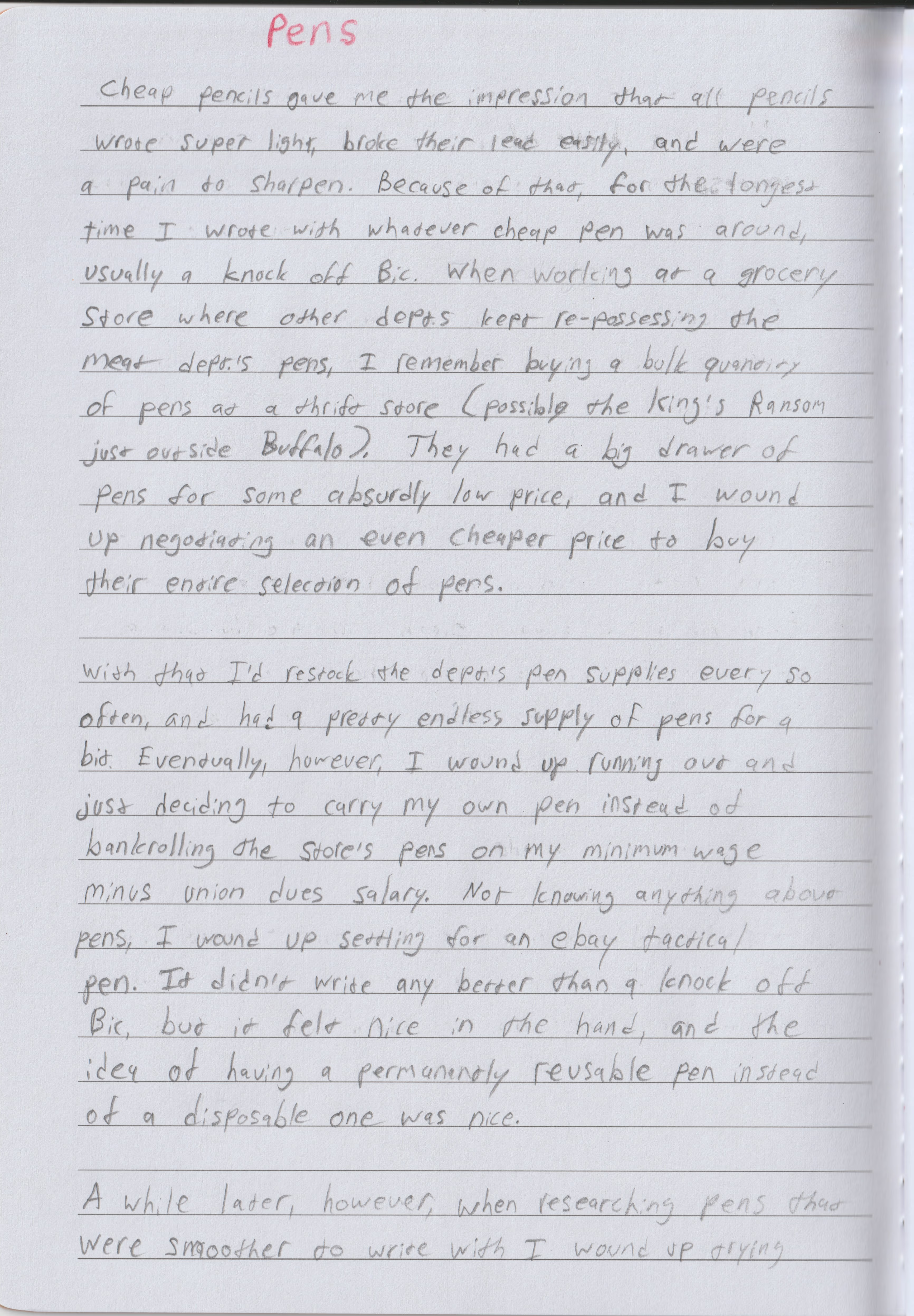
Pens
Cheap pencils gave me the impression that all pencils wrote super light, broke their lead easily, and were a pain to sharpen. Because of that, for the longest time I wrote with whatever cheap pen was around, usually a knock off Bic. When working at a grocery store where other dept.’s kept re-possessing the meat dept.’s pens, I remember buying a bulk quantity of pens at a thrift store (possibly the King’s Ransom just outside Buffalo). They had a big drawer of pens for some absurdly low price, and I wound up negotiating an even cheaper price to buy their entire selection of pens.
With that I’d restock the dept.’s pen supplies every so often, and had a pretty endless supply of pens for a bit. Eventually, however, I wound up running out and just deciding to carry my own pen instead of bankrolling the store’s pens on my minimum wage minus union dues salary. Not knowing anything about pens, I wound up settling for an ebay tactical pen. It didn’t write any better than a knock off Bic, but it felt nice in the hand, and the idea of having a permanently reusable pen instead of a disposable one was nice.
A while later, however, when researching pens that were smoother to write with I wound up trying
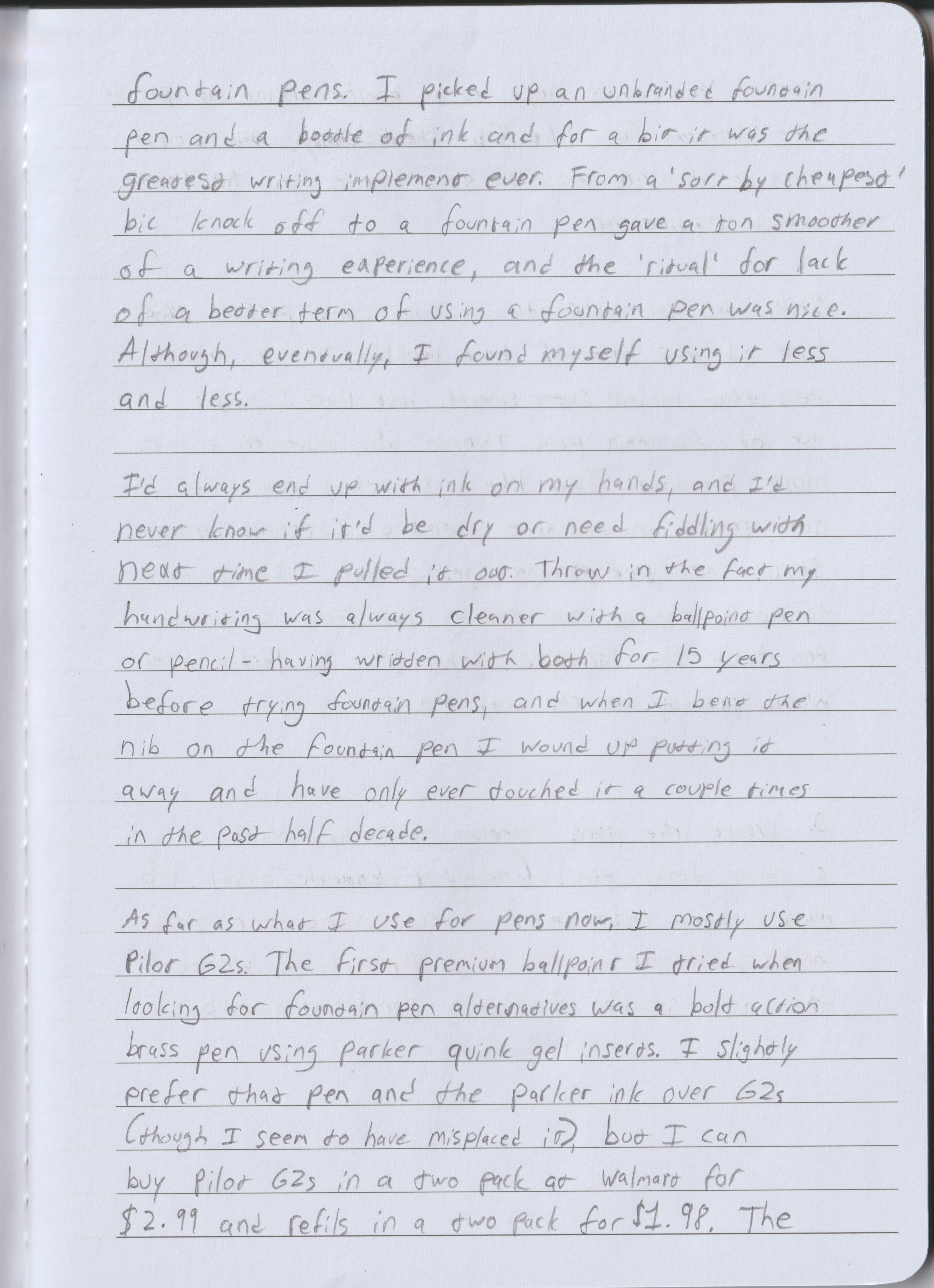
fountain pens. I picked up an unbranded fountain pen and a bottle of ink and for a bit it was the greatest writing implement ever. From a ‘sort by cheapest’ bic knock off to a fountain pen gave a ton smoother of a writing experience, and the ‘ritual’ for lack of a better term of using a fountain pen was nice. Although, eventually, I found myself using it less and less.
I’d always end up with ink on my hands, and I’d never know if it’d be dry or need fiddling with next time I pulled it out. Throw in the fact my handwriting was always cleaner with a ballpoint pen or pencil - having written with both for 15 years before trying fountain pens, and when I bent the nib on the fountain pen I wound up putting it away and have only ever touched it a couple times in the past half decade.
As far as what I use for pens now, I mostly use Pilot G2s. The first premium ballpoint I tried when looking for fountain pen alternatives was a bolt action brass pen using Parker quink gel inserts. I slightly prefer that pen and the parker ink over G2s (though I seem to have misplaced it), but I can buy Pilot G2s in a two pack at walmart for $2.99 and refils in a two pack for $1.98. The
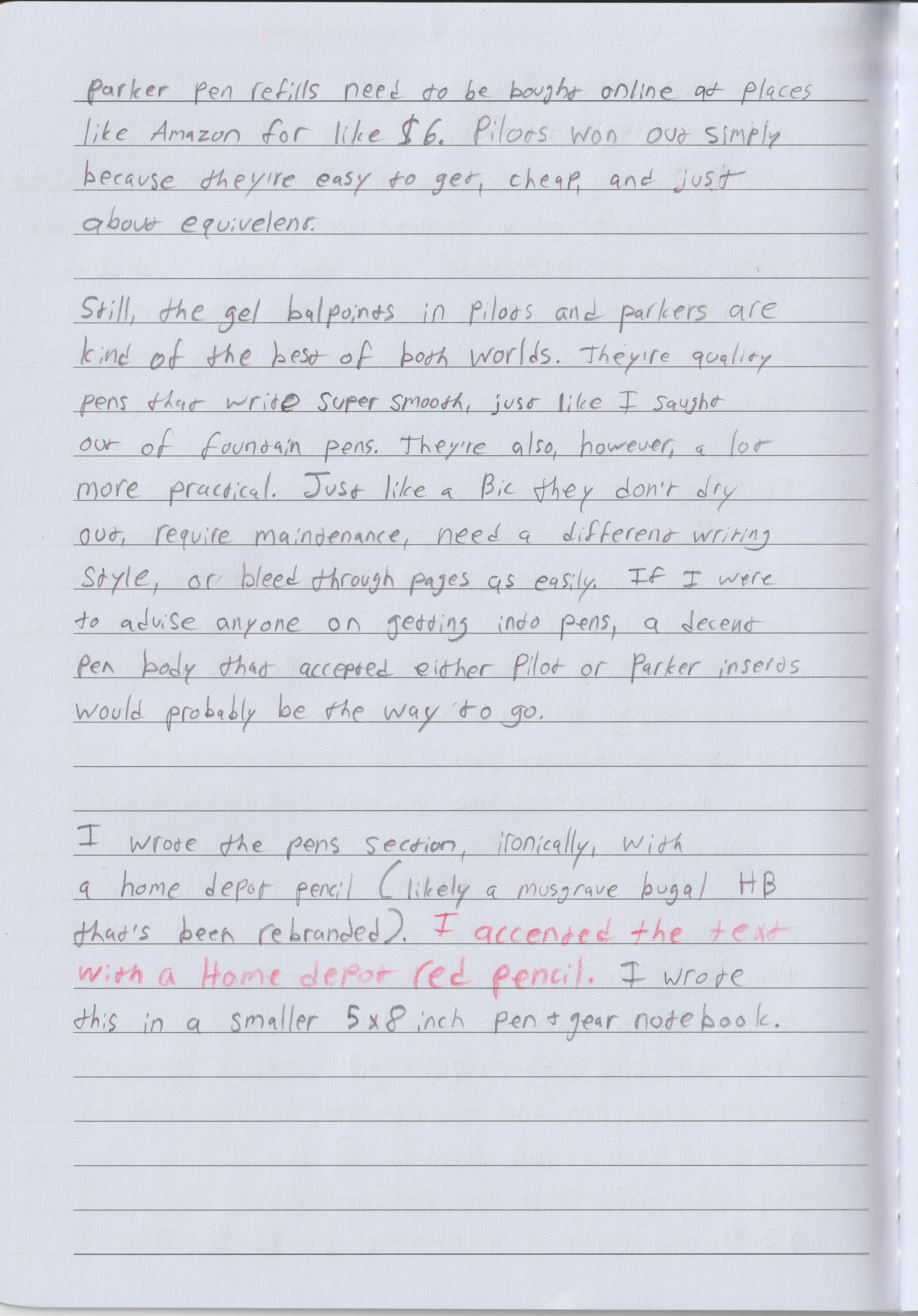
parker pen refills need to be bought online at places like Amazon for like $6. Pilots won out simply because theyire easy to get, cheap, and just about equivelent.
Still, the gel balpoints in Pilots and parkers are kind of the best of both worlds. Theyire quality pens that write super smooth, just like I saught out of fountain pens. They’re also, however, a lot more practical. Just like a Bic they don’t dry out, require maintenance, need a different writing style, or bleed through pages as easily. If I were to advise anyone on getting into pens, a decent pen body that accepted either Pilot or Parker inserts would probably be the way to go.
I wrote the pens section, ironically, with a home depot pencil (likely a musgrave bugal HB that’s been rebranded). I accented the text with a Home depot red pencil. I wrote this in a smaller 5x8 inch pen+gear notebook.
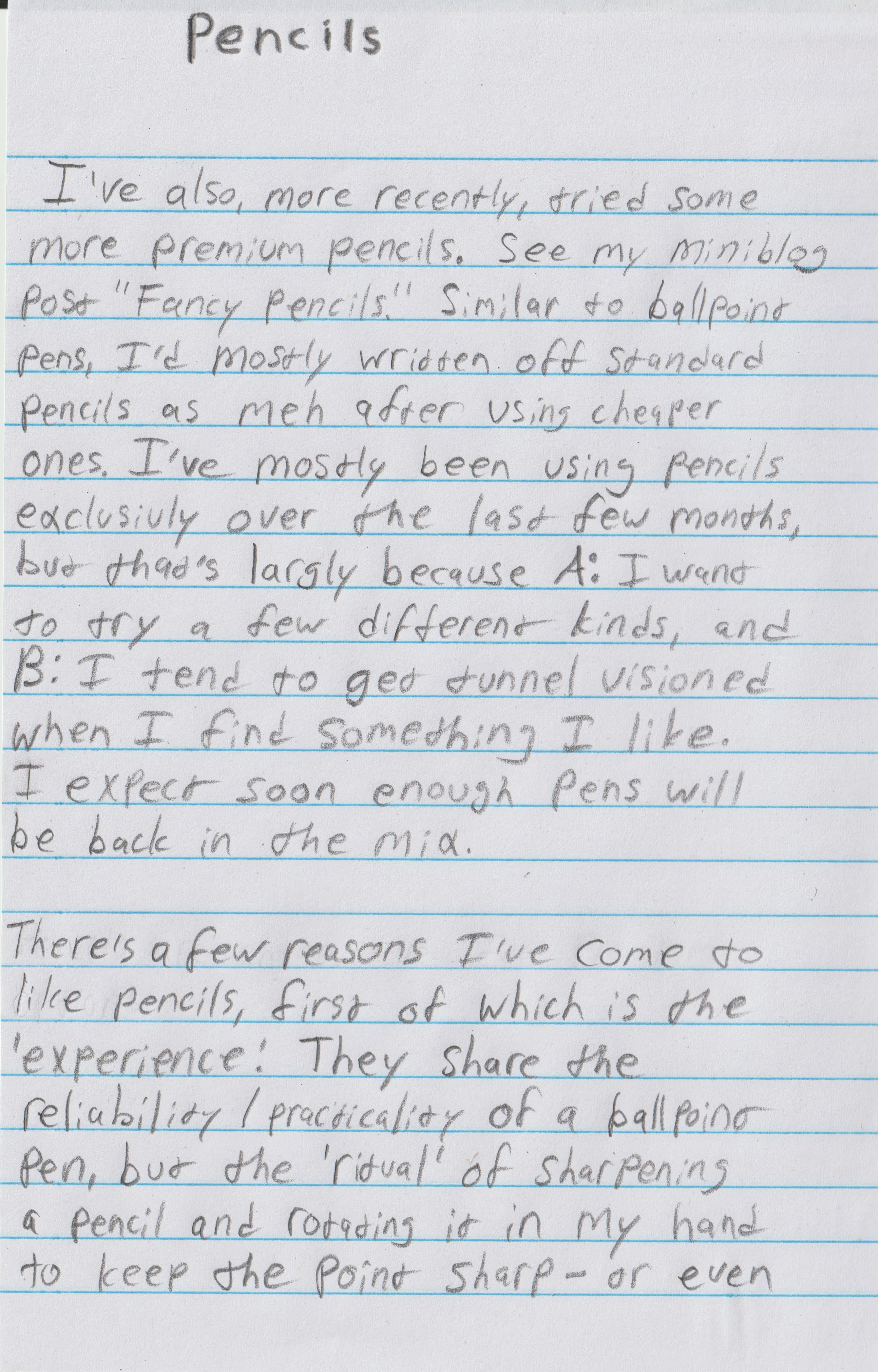
Pencils
I’ve also, more recently, tried some more premium pencils. See my miniblog post “Fancy Pencils.” Similar to ballpoint pens, I’d mostly written off standard pencils as meh after using cheaper ones. I’ve mostly been using pencils exclusivly over the last few months, but that’s largly because A: I want to try a few different kinds, and B: I tend to get tunnel visioned when I find something I like. I expect soon enough pens will be back in the mix.
There’s a few reasons I’ve come to like pencils, first of which is the ’experience’. They share the reliability/practicality of a ballpoint pen, but the ‘ritual’ of sharpening a pencil and rotating it in my hand to keep the point sharp - or even
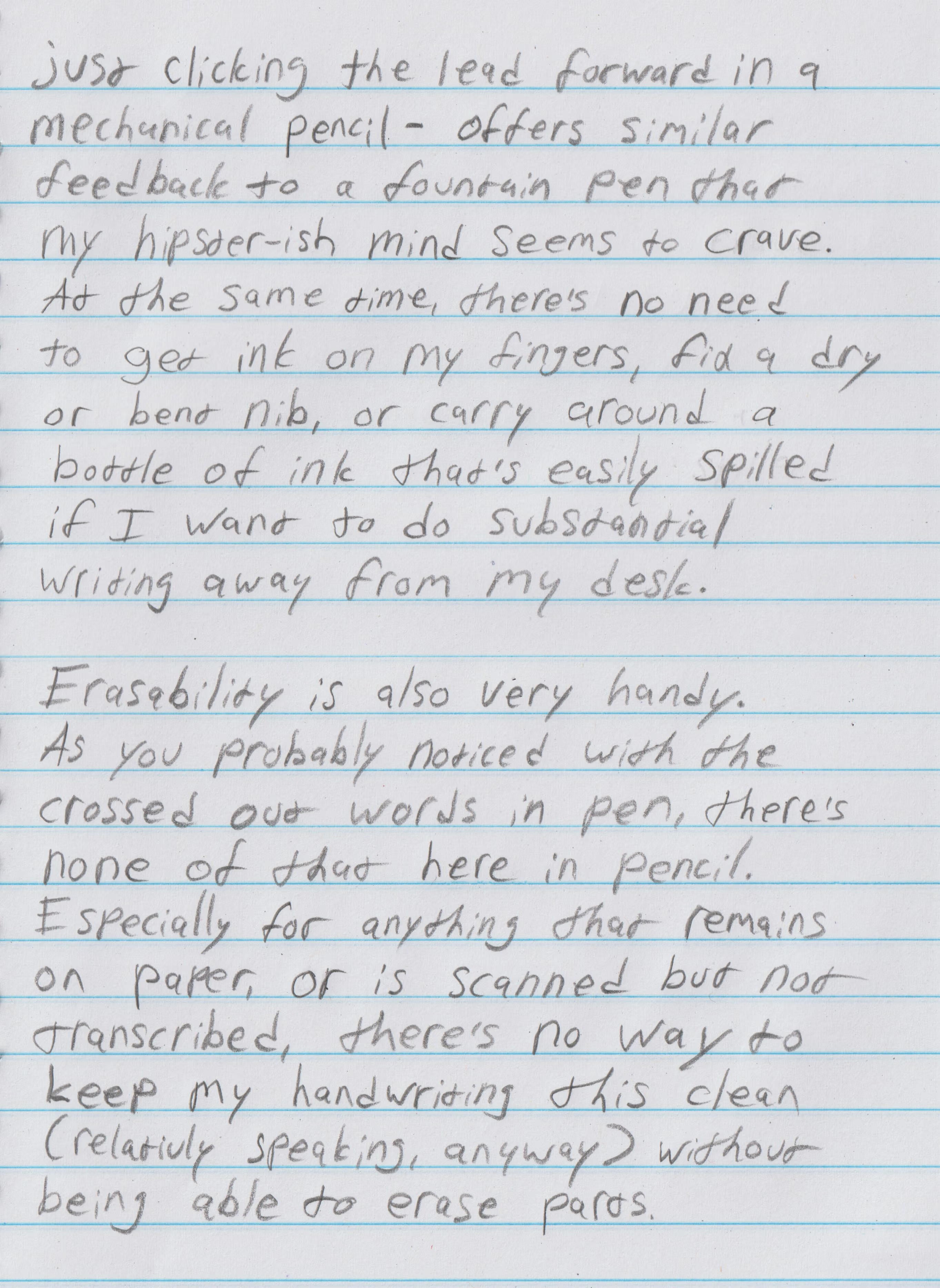
just clicking the lead forward in a mechanical pencil - offers similar feedback to a fountain pen that my hipster-ish mind seems to crave. At the same time, there’s no need to get ink on my fingers, fix a dry or bent nib, or carry around a bottle of ink that’s easily spilled if I want to do substantial writing away from my desk.
Erasability is also very handy. As you probably noticed with the crossed out words in pen, there’s none of that here in pencil. Especially for anything that remains on paper, or is scanned but not transcribed, there’s no way to keep my handwriting this clean (relativly speaking, anyway) without being able to erase parts.
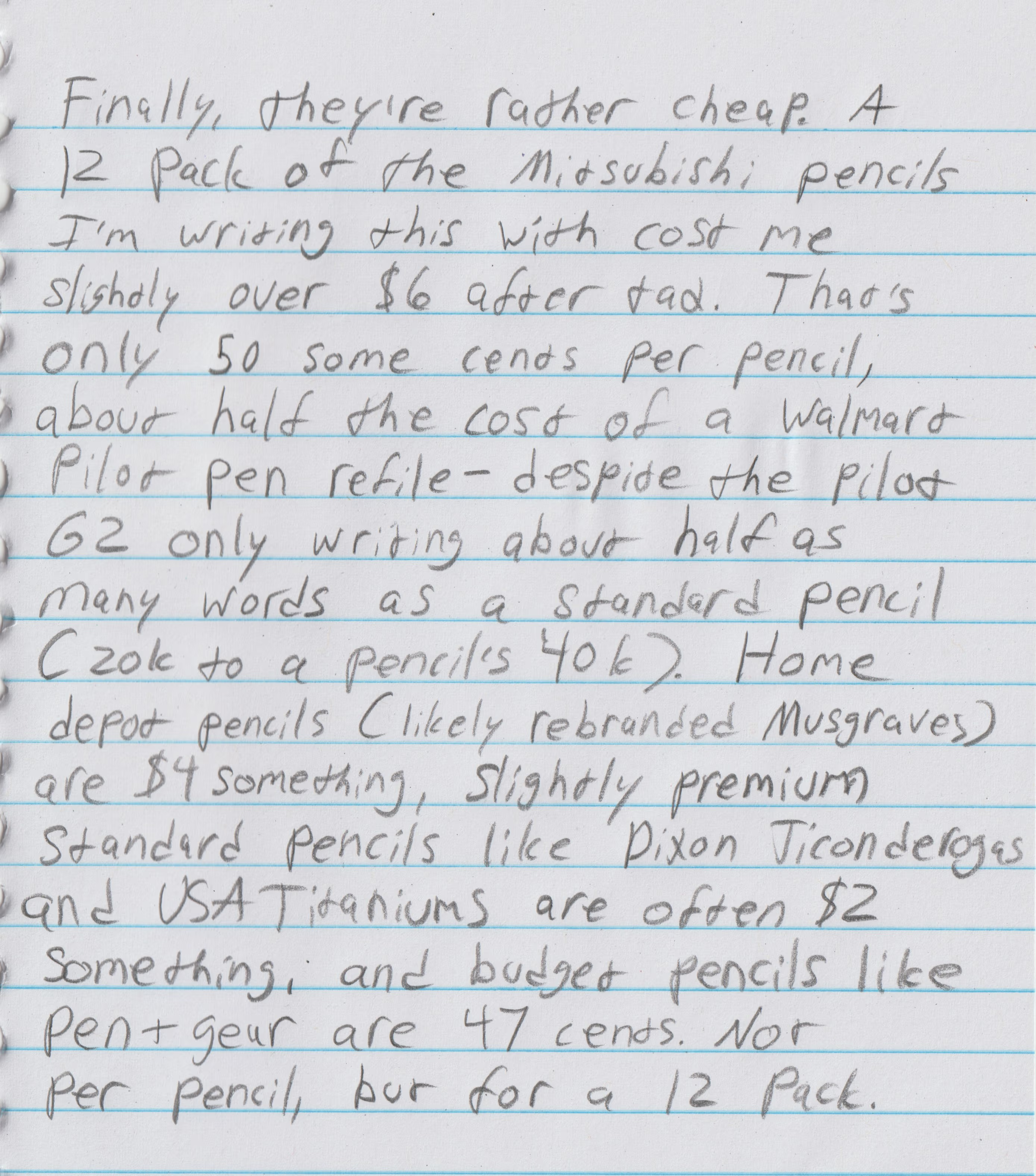
Finally, they’re rather cheap. A 12 pack of the Mitsubishi pencils I’m writing this with cost me slightly over $6 after tax. That’s only 50 some cents per pencil, about half the cost of a Walmart Pilot pen refile - despite the Pilot G2 only writing about half as many words as a standard pencil (20k to a pencil’s 40k). Home depot pencils (likely rebranded Musgraves) are $4 something, slightly premium standard pencils like Dixon Ticonderogas and USA Titaniums are often $2 something, and budget pencils like Pen+gear are 47 cents. Not per pencil, but for a 12 pack.
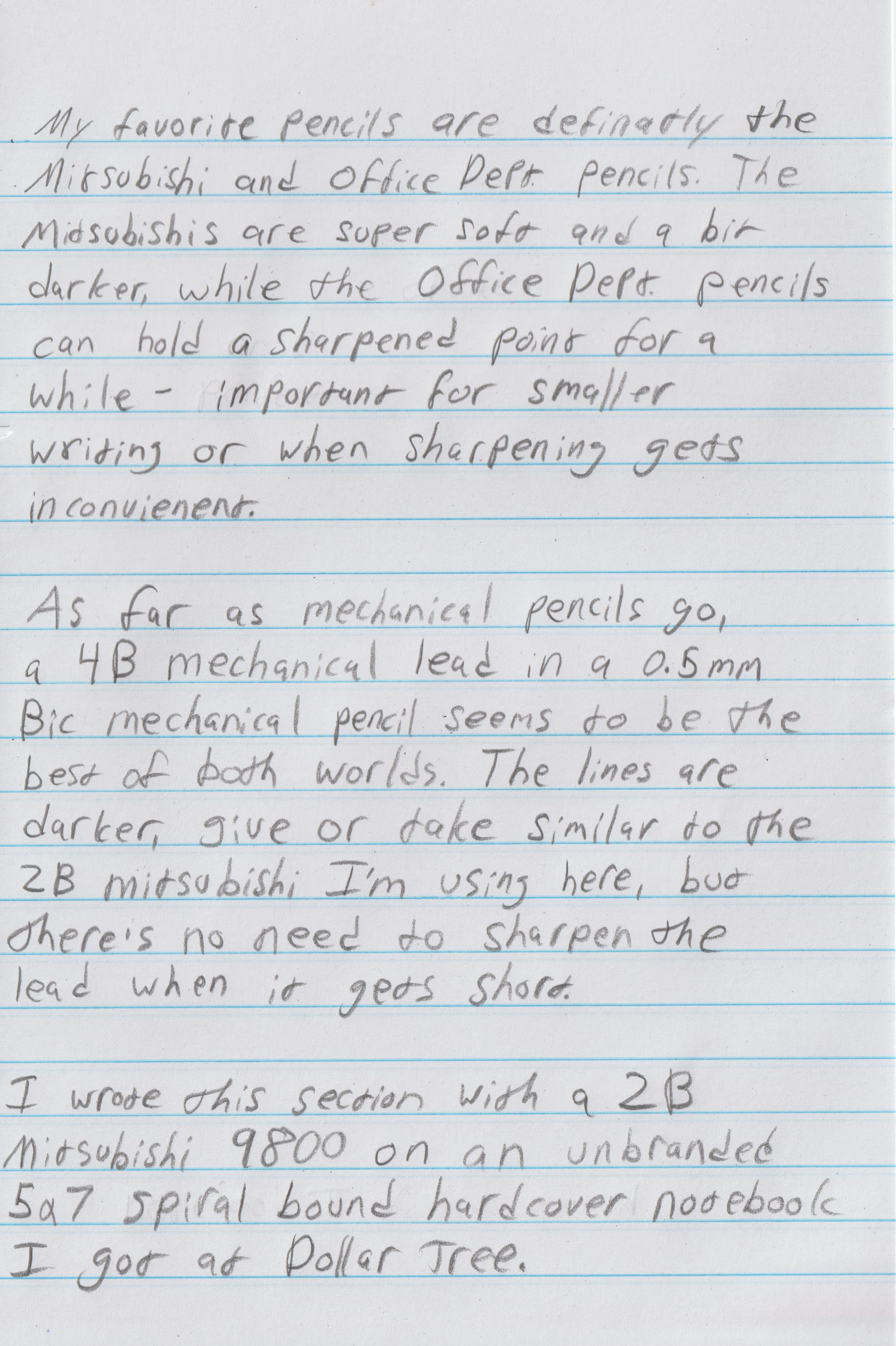
My favorite pencils are definatly the Mitsubishi and Office Dept. pencils. The Mitsubishis are super soft and a bit darker, while the Office Dept. pencils can hold a sharpened point for a while - important for smaller writing or when sharpening gets inconvienent.
As far as mechanical pencils go, a 4B mechanical lead in a 0.5mm Bic mechanical pencil seems to be the best of both worlds. The lines are darker, give or take similar to the 2B mitsubishi I’m using here, but there’s no need to sharpen the lead when it gets short.
I wrote this section with a 2B Mitsubishi 9800 on an unbranded 5x7 spiral bound hardcover notebook I got at Dollar Tree.
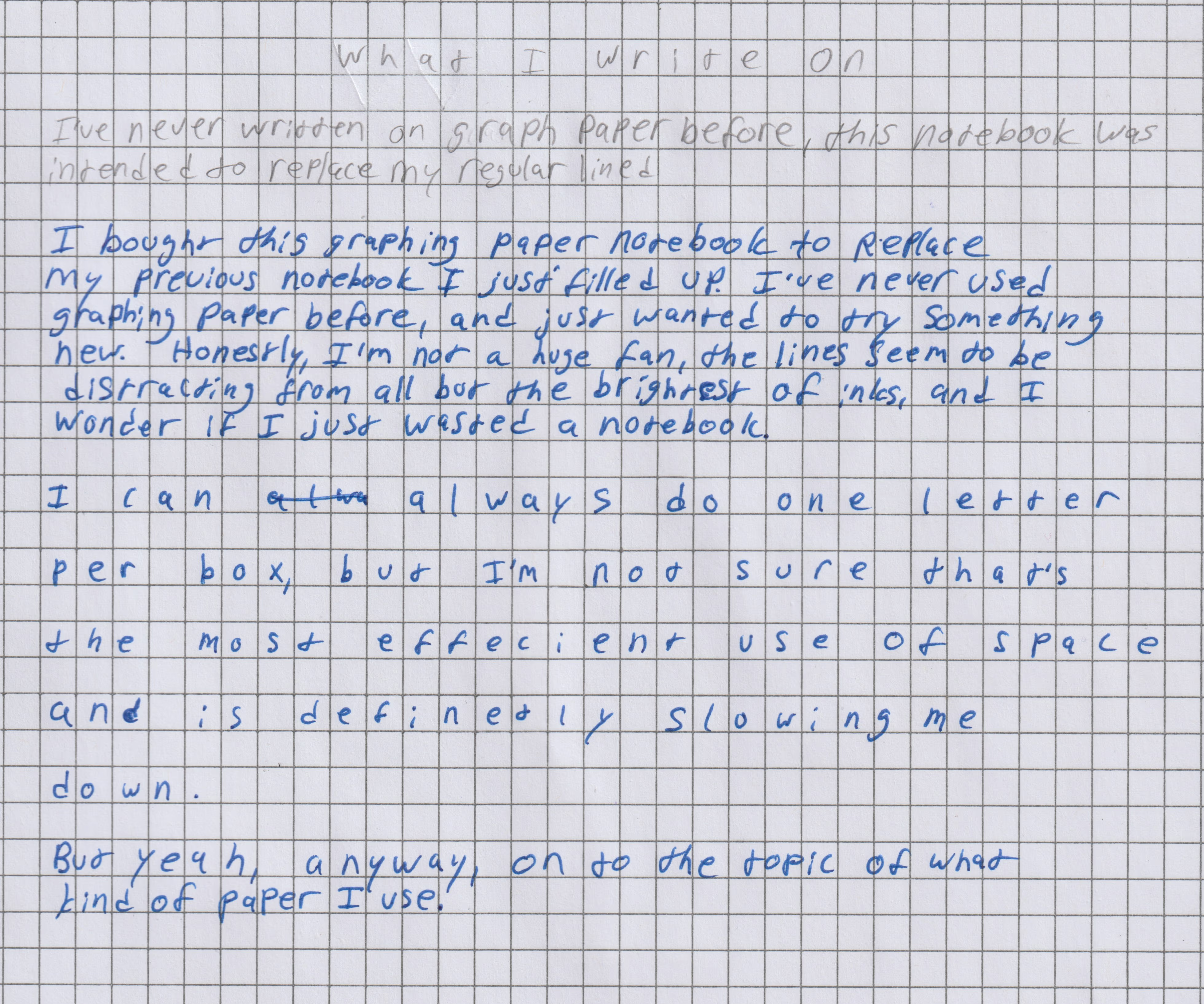
W h a t I w r i t e O n
I’ve never written on graph paper before, this notebook was intended to replace my regular lined
I bought this graphing paper notebook to replace my previous notebook I just filled up. I’ve never used graphing paper before, and just wanted to try something new. Honestly, I’m not a huge fan, the lines seem to be distracting from all but the brightest of inks, and I wonder if I just wasted a notebook.
I   c a n   a̶l̶w̶a̶   a l w a y s   d o   o n e   l e t t e r

p e r   b o x,   b u t   I'm   n o t   s u r e   t h a t's

t h e   m o s t   e f f e c i e n t   u s e   o f   s p a c e

a n d   i s   d e f i n e t l y   s l o w i n g   m e

d o w n .
But yeah, anyway, on to the topic of what kind of paper I use.
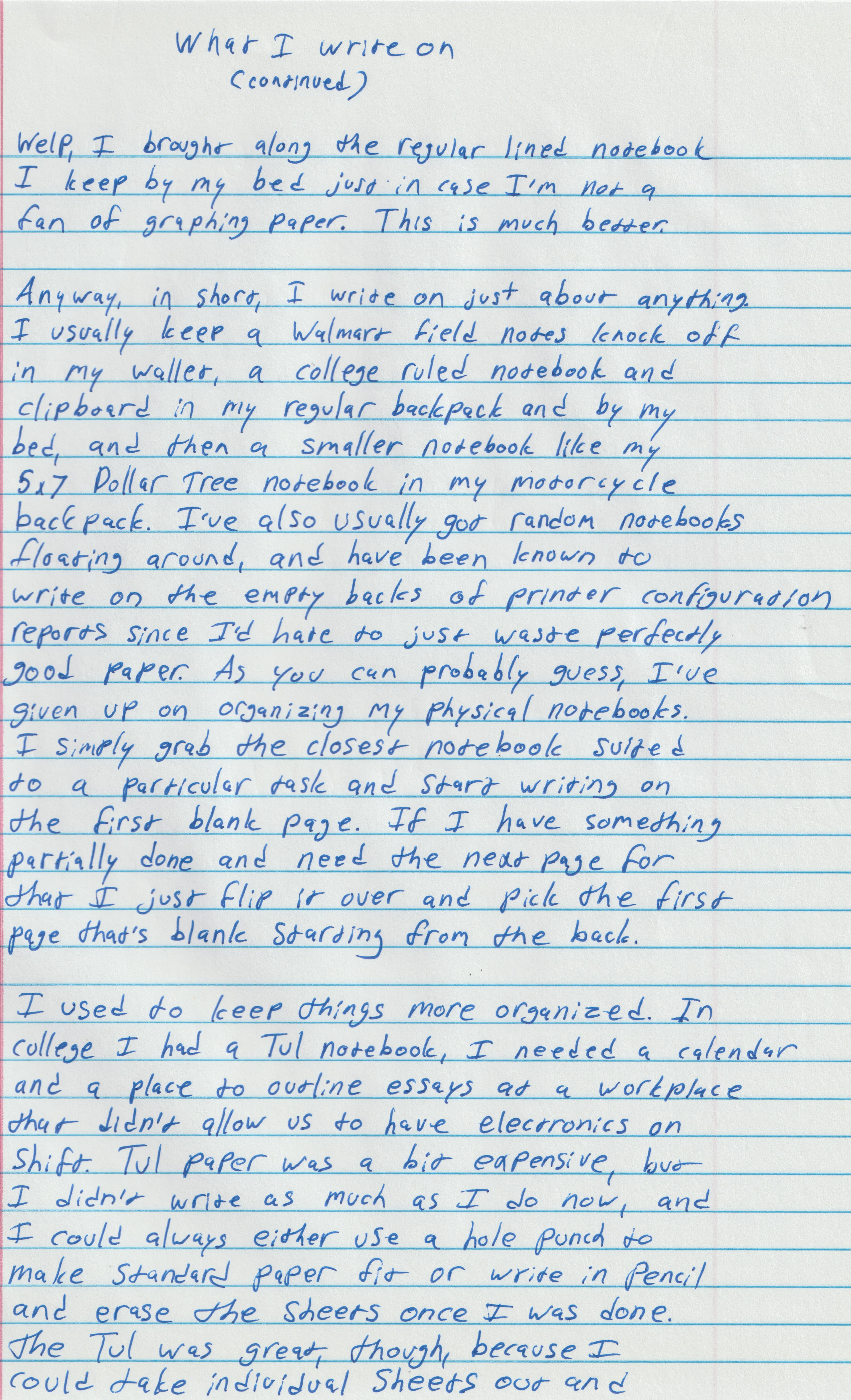
What I write on
(continued)
Welp, I brought along the regular lined notebook I keep by my bed just in case I’m not a fan of graphing paper. This is much better.
Anyway, in short, I write on just about anything. I usually keep a Walmart field notes knock off in my wallet, a college ruled notebook and clipboard in my regular backpack and by my bed, and then a smaller notebook like my 5x7 Dollar Tree notebook in my motorcycle backpack. I’ve also usually got random notebooks floating around, and have been known to write on the empty backs of printer configuration reports since I’d hate to just waste perfectly good paper. As you can probably guess, I’ve given up on organizing my physical notebooks. I simply grab the closest notebook suited to a particular task and start writing on the first blank page. If I have something partially done and need the next page for that I just flip it over and pick the first page that’s blank starting from the back.
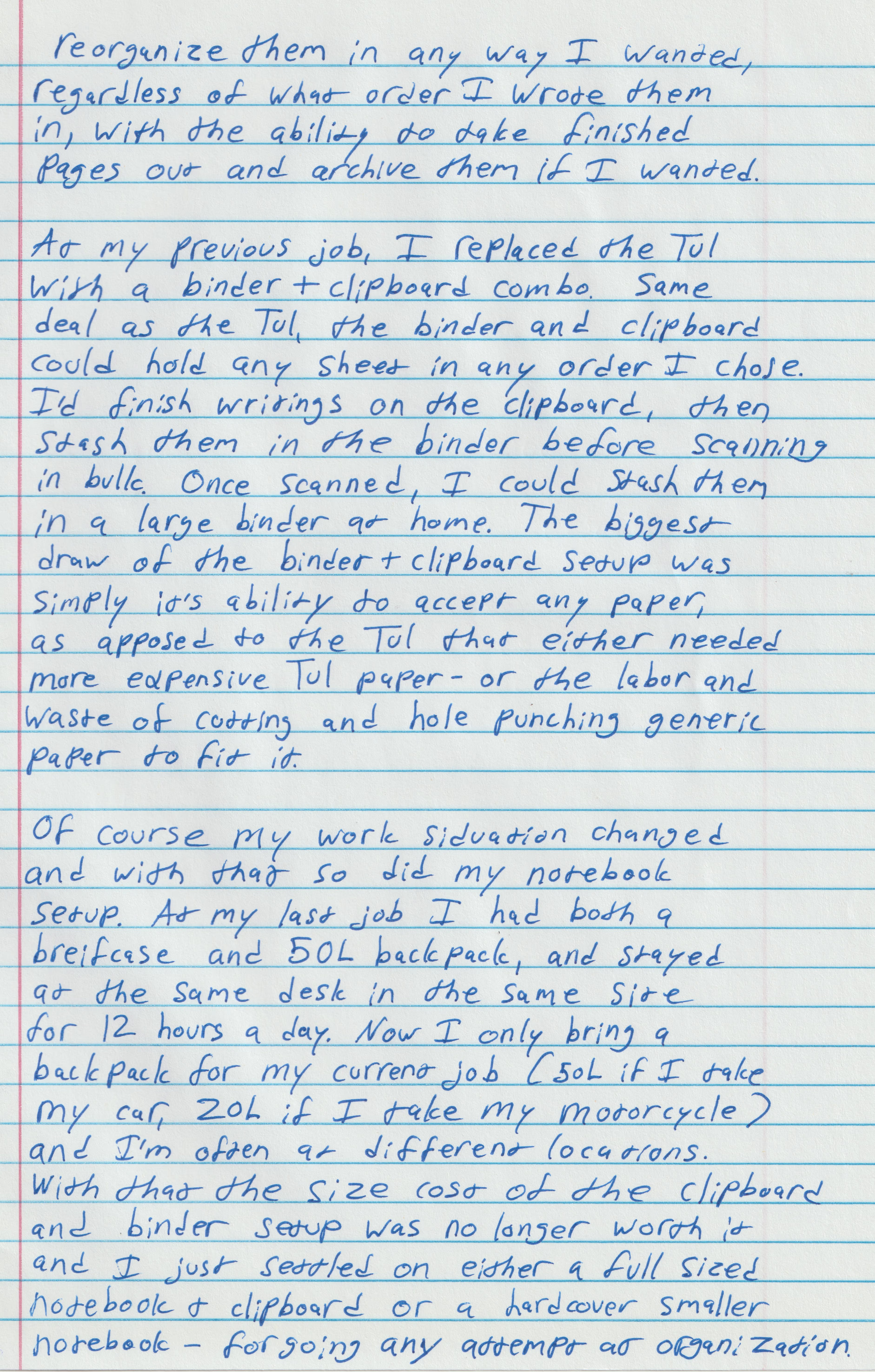
I used to keep things more organized. In college I had a Tul notebook, I needed a calendar and a place to outline essays at a workplace that didn’t allow us to have electronics on shift. Tul paper was a bit expensive, but I didn’t write as much as I do now, and I could always either use a hole punch to make standard paper fit or write in pencil and erase the sheets once I was done. The Tul was great, though, because I could take individual sheets out and
reorganize them in any way I wanted, regardless of what order I wrote them in, with the ability to take finished pages out and archive them if I wanted.
At my previous job, I replaced the Tul with a binder + clipboard combo. Same deal as the Tul, the binder and clipboard could hold any sheet in any order I chose. I’d finish writings on the clipboard, then stash them in the binder before scanning in bulk. Once scanned, I could stash them in a large binder at home. The biggest draw of the binder + clipboard setup was simply it’s ability to accept any paper, as apposed to the Tul that either needed more expensive Tul paper - or the labor and waste of cutting and hole punching generic paper to fit it.
Of course my work situation changed and with that so did my notebook setup. At my last job I had both a breifcase and 50L backpack, and stayed at the same desk in the same site for 12 hours a day. Now I only bring a backpack for my current job (50L if I take my car, 20L if I take my motorcycle) and I’m often at different locations. With that the size cost of the clipboard and binder setup was no longer worth it and I just settled on either a full sized notebook + clipboard or a hardcover smaller notebook - forgoing any attempt at organization.
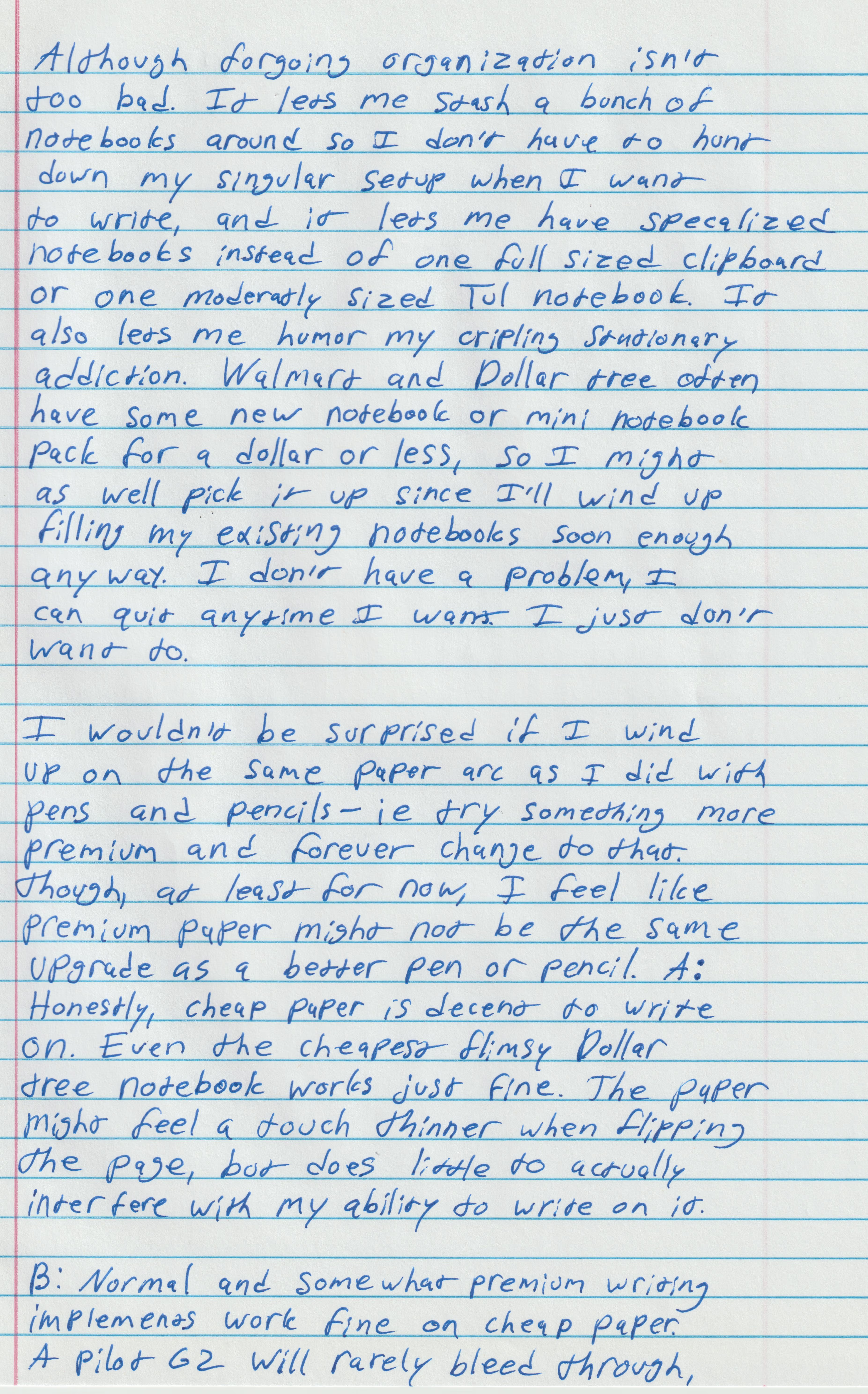
Although forgoing organization isn’t too bad. It lets me stash a bunch of notebooks around so I don’t have to hunt down my singular setup when I want to write, and it lets me have specalized notebooks instead of one full sized clipboard or one moderatly sized Tul notebook. It also lets me humor my cripling stationary addiction. Walmart and Dollar tree often have some new notebook or mini notebook pack for a dollar or less, so I might as well pick it up since I’ll wind up filling my existing notebooks soon enough anyway. I don’t have a problem, I can quit anytime I want. I just don’t want to.
I wouldn’t be surprised if I wind up on the same paper arc as I did with pens and pencils - ie try something more premium and forever change to that. Though, at least for now, I feel like premium paper might not be the same upgrade as a better pen or pencil. A: Honestly, cheap paper is decent to write on. Even the cheapest flimsy Dollar tree notebook works just fine. The paper might feel a touch thinner when flipping the page, but does little to actually interfere with my ability to write on it.
B: Normal and somewhat premium writing implements work fine on cheap paper. A Pilot G2 will rarely bleed through,
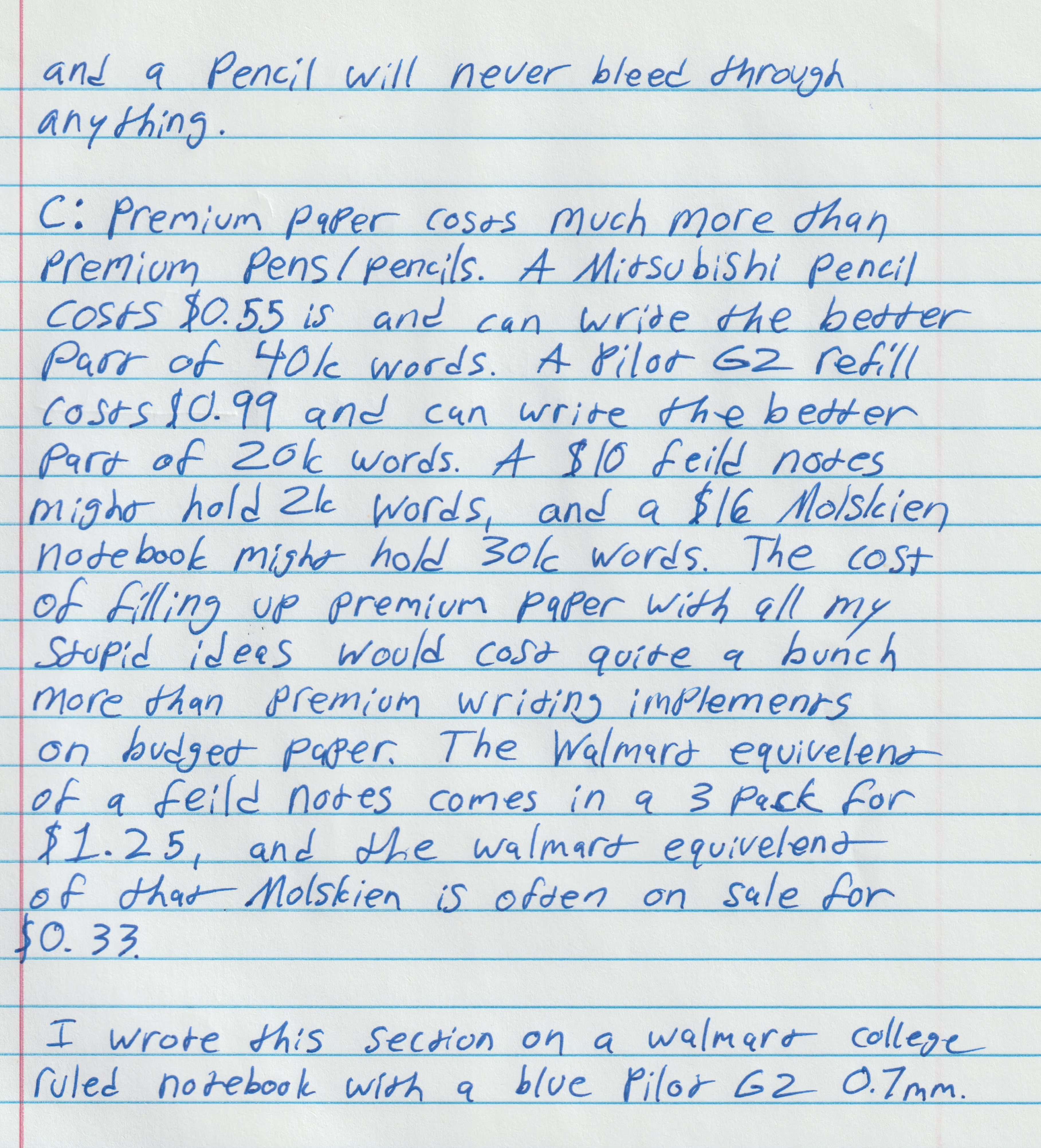
and a Pencil will never bleed through anything.
C: Premium paper costs much more than premium pens/pencils. A Mitsubishi pencil costs $0.55 is and can write the better part of 40k words. A Pilot G2 refill costs $0.99 and can write the better part of 20k words. A $10 feild notes might hold 2k words, and a $16 Molskien notebook might hold 30k words. The cost of filling up premium paper with all my stupid ideas would cost quite a bunch more than premium writing implements on budget paper. The Walmart equivelent of a feild notes comes in a 3 pack for $1.25, and the walmart equivelent of that Molskien is often on sale for $0.33.
I wrote this section on a walmart college ruled notebook with a blue Pilot G2 0.7mm.
WHAT TO DO WITH HANDWRITTEN CONTENT
The biggest issue with handritten content is it’s lack of versitality. You can’t seamlessly edit physical documents, duplicate them to back them up and access them anywhere on any device, and store near limitless amounts without needing physical space. Just about anything I write physically ends up getting digitized.
I’m a big fan of OSS Document Scanner, an open source android app that handles the bulk of the scanning process (just take a few photos, manually crop or rely on it’s auto crop feature, and set what-if-any image filters to apply) before it hands you a finished PDF. Almost everything I write ends up being fed into it, these scans being an exeption since the added quality of using a printer adds to the ‘asterics’ compared to the lower quality but more convienent phone based scans.
For stuff I don’t need in text form, that’s where the process ends. A legible pdf is added to my ‘syncbook’ folder, a syncthing powered directory that acts as
a digital notebook spread across my computer, tablet, and phone. For anything that did need to become regular text - such as a blog post or Untitled Novel chapter - I’d manually transcribe it to a text document.
As of recently, however, I’ve found some really great luck using Claude to transcribe my handwriting from OSS generated PDFs. I’ve experimented on and off in the past, trying to get OCR and AI systems to reliably transcribe my sloppy handwriting (I’m making an effort to make it more legible here, and there’s no marginal notes or shorthand like I often use) with poor success until trying Claude.
This has been a real game changer. Like I mentioned in the why section, for something like a blog post draft, I’m usually limited by the speed I can type. Writing by hand might be more enjoyable or convienent during a particular situation, but if it takes me 1hr to type up a blog post draft from scratch or 55min to transcribe a written blog post than writing it on paper seems kind of pointless. I will go through
a round of revising during the transcription, but most of that time is wasted writing the same words a second time using a different medium. The ability to get a 1:1 text document from a paper document is probably going to seriously shake up my writing workflow.
Ive joked about this elswhere, but having handwritten content transcribed by AI is probably going to make a lot of Luddites very confused. It doesn’t get more hypster analogue than a pencil and a notebook, and yet doesn’t get more tech bro than adding AI to my writing workflow. The go to of “slop” doesn’t work outside of calling the contents of my notebook slop (which, to be fair, it may be some times). It also probably takes less energy for Claude to transcribe the post than for me to type it up at my computer, and definitly takes less energy than the production of the paper I wrote this on. Food for thought. (see Andy Masley’s posts comparing AI energy consumption to other things)
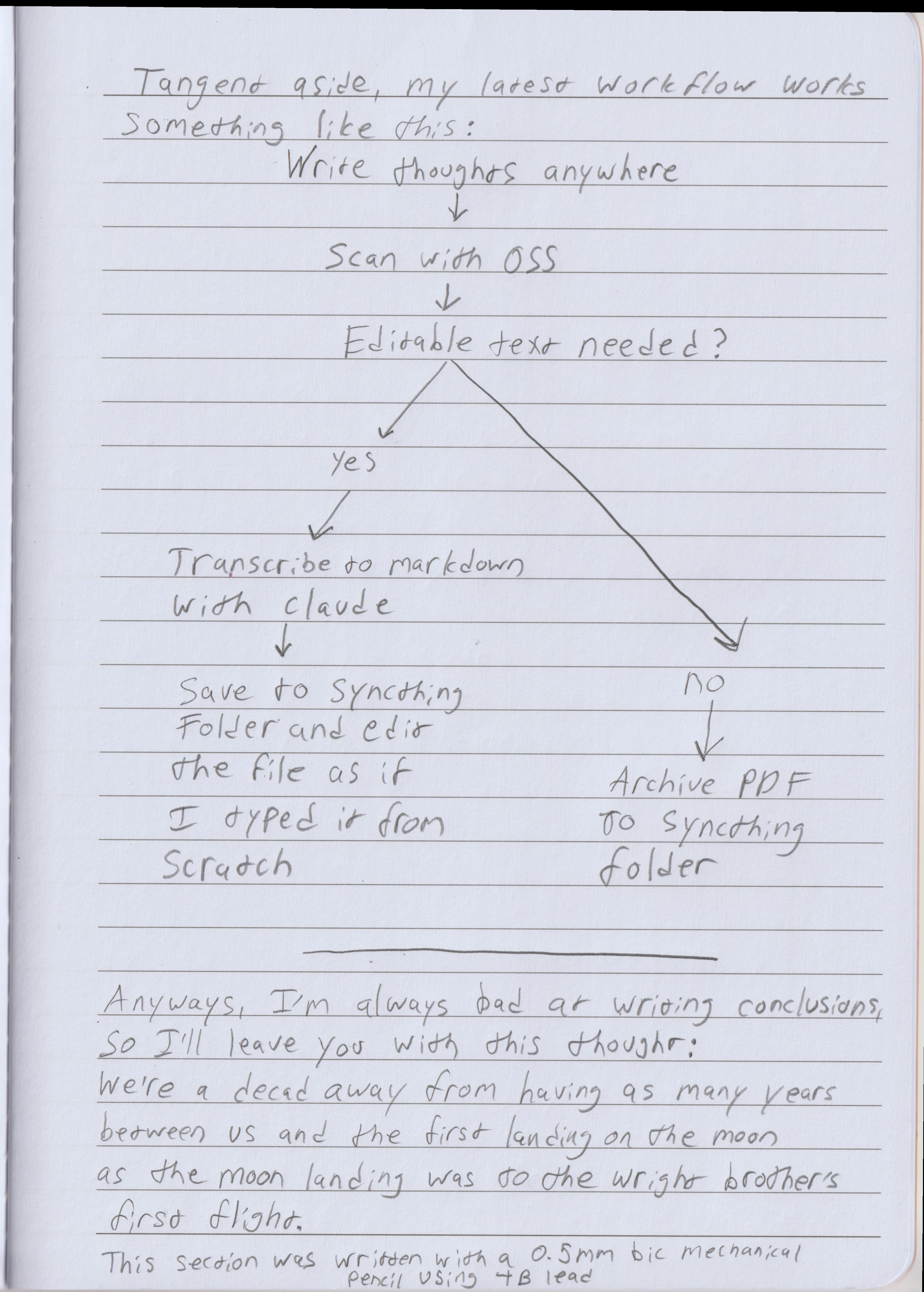
Tangent aside, my latest workflow works something like this:
                  Write thoughts anywhere
                            ↓
                      Scan with OSS
                            ↓
                  Editable text needed?
                          /     \
                         ↙       \
                      yes         \
                      ↙            \
      Transcribe to markdown        \
      with claude                    ↘
            ↓                         no
      Save to Syncthing               ↓
      folder and edit            Archive PDF
      the file as if             to Syncthing
      I typed it from            folder
      scratch
Anyways, I’m always bad at writing conclusions, so I’ll leave you with this thought: We’re a decad away from having as many years between us and the first landing on the moon as the moon landing was to the wright brother’s first flight.
This section was written with a 0.5mm bic mechanical pencil using 4B lead